The FASD community came together for National FASD Impact Week in Washington, DC, proudly hosted by FASD United. Over the course of four jam-packed days last week (September 14-17), advocates, researchers, and families came together to organize, strategize, learn, and celebrate. Through workshops, a symposium, a successful advocacy-filled “Hill Day,” a film screening, and a gala celebration, the FASD community showed up with passion and resolve to ensure that FASD gets a “seat at the table” where decisions are made that impact our community.
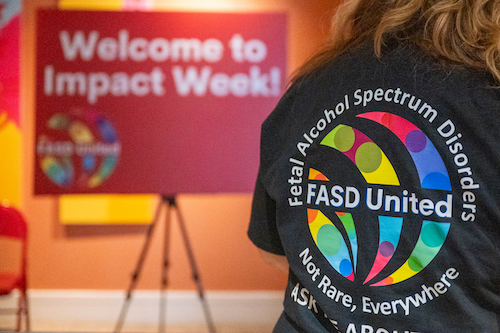
Successful advocacy push culminates with passage of the Respect Act!
Thanks to the tireless work of advocates from across the country who gathered on Capitol Hill for our annual “Hill Day,” we can share that the U.S. Senate has just passed the FASD Respect Act (as part of the SUPPORT Act). Following passage by the U.S. House of Representatives in June, the Respect Act now awaits the President’s signature to be enacted into law! What a way to cap off a week of advocacy, featuring family members, self-advocates, and professionals who all made their voices heard by meeting directly with their legislators in their House and Senate offices during Tuesday’s Hill Day.
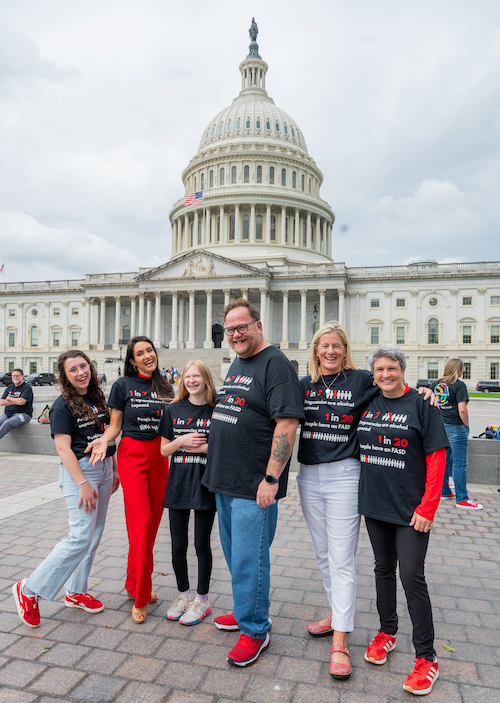
Over 100 advocates had over 70 meetings with offices across over 25 states. A mix of longtime advocates and those newer to the cause showed up and shared their deeply personal stories, along with clear talking points, facts and figures. One advocate said, “It was great to talk about how far we’ve come and I was so excited when I was told that I do indeed have our representative’s support.”
This year’s Hill Day T-shirt was a massive hit! Featuring a powerful visualization of the “1 in 20” FASD prevalence rate, the shirts caught the attention of more than a few people who had been unfamiliar with FASD. In addition to truly raising awareness of this too-often non-apparent disability, the sea of advocates in their Hill Day shirts served as a striking reminder of the size and strength of the FASD movement.
Only two days after Hill Day, we learned that the Senate had passed the Respect Act. As the exciting news rippled through the team at FASD United and the policy committee, a wave of celebration spread rapidly throughout the FASD community. An impromptu celebration was called and advocates could hardly contain their joy and gratitude for this historic achievement. As advocate after advocate got emotional describing the law’s impact on their own family, a growing recognition of the power of the FASD community set it, validating our efforts to move further towards our vision of a truly FASD-informed world.
A renewed Call to Action
Monday featured an engaging and productive symposium, in which leaders across many disciplines in the FASD field, including members of the FASD United Affiliate Network, worked collaboratively to brainstorm creative ways to move the field forward. Attendees gained valuable insight as they explored opportunities for cross-collaboration and generated ideas on important topics such as diagnosis and screening and agency collaboration.
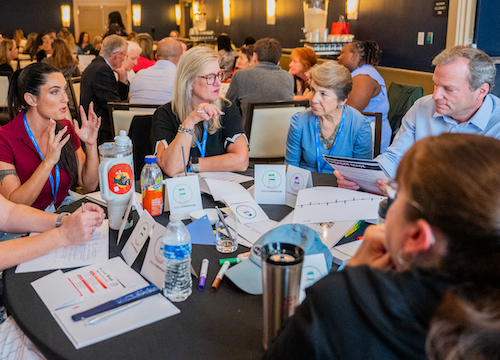
Much of the discussion centered around the topic of professional education and what steps we can take as a field to better educate doctors, clinicians, and other healthcare professionals that interact with people who may become pregnant. The discussion then shifted to a strategy session on grassroots efforts and how we can leverage our collective resources to deliver results with often modest resources at our disposal. The symposium concluded with a discussion of FASD data and how we can generate more much-needed data and best apply this data to our mission and objectives.
The 2009 “A Call to Action” document created by a congressionally named task force on FASD served as the jumping off point for the group to reflect on where we are as a field. Lead author Dr. Heather Carmichael Olson joined the symposium and helped to provide context and direction for participants. The group discussions and reports generated by this symposium are forming the foundation for an upcoming white paper developed by FASD United, which will present a summary of the discussions.
A powerful display of research in action
Monday afternoon featured a poster reception. Nearly 40 posters were presented on a range of topics, including ongoing clinical projects, medical research, intervention programs, and community services. Filling up the conference room and even spilling over into the hallway, the Impact Week Poster Reception was an incredible opportunity for people in attendance to hear from others in the field and ask questions directly to those involved.
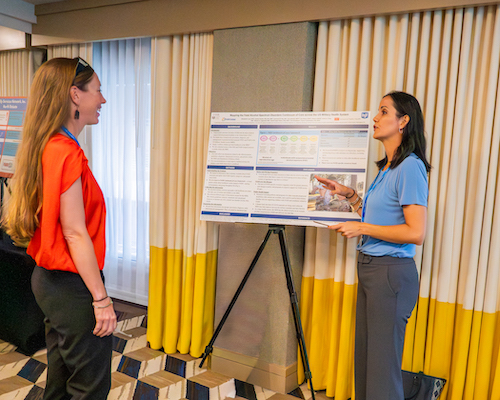
Researchers, community organizations (including affiliates of FASD United), government health agencies, and others shared information, research findings, opportunities for collaboration, and services with the broader audience at Impact Week.
The posters were specifically designed to present in-depth and sometimes complex information and concepts in plain language for a general non-scientific audience, representing a diverse cross-section of the FASD community. The session strengthened partnerships, offered additional opportunities for collaboration, and expanded our knowledge base of the many facets of FASD and how to support those affected.
Also on display, at a session on Wednesday, were the latest findings from an exciting group of emerging researchers. Siara Rouzer, behavioral neuroscientist at Texas A&M College of Medicine, explained the results of fascinating new research into the paternal effects of alcohol exposure, broadening the conversation around alcohol use to include both biological parents. The passion and drive of these up-and-coming researchers made everyone feel inspired and optimistic about the future of the FASD field.
A meaningful film screening that centers the living experience
Sunday evening featured a special sneak peel film screening of “FASD and the Pursuit of the Respect Act,” a feature documentary film by award-winning director Mike Champlin and producer Dr. Christie Petrenko, a leading researcher and expert in the FASD field. The screening was a tremendous success, as families and professionals in the room expressed their appreciation for the way the film told the story of what it is like to live with FASD by centering the living experience.
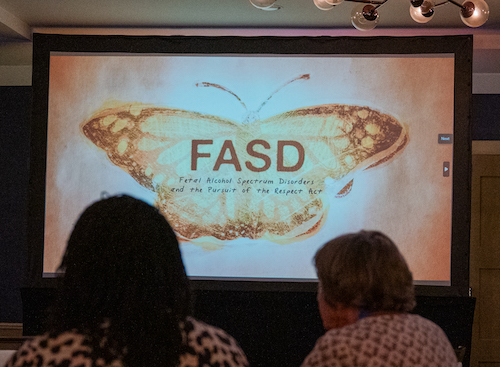
Produced by the University of Rochester, the film stars incredible self-advocates including Emily Hargrove, who was in attendance and shared her gratitude for having this platform to share her story with others. For Emily, watching the film in a room filled with so many champions of the FASD community felt a bit surreal, and served as further inspiration to advocate and speak out. We were honored to host this screening, given its powerful insight into advocacy and the way it serves as a vehicle to amplify the voices of those living with FASD.
Collaborating with our partners at agencies and organizations
FASD United was honored to bring together many of our partners across Federal agencies as well as organizations. Tuesday featured a working meeting of the CDC National Partner Network. This was a great opportunity to strengthen the bonds between our organizations as we plan our next phase of work in our project to reduce alcohol-exposed pregnancies, educate professionals in systems of care, and better support families. Organizations got to see the latest products and materials developed by each of the partners, ask questions, and share best practices with each other.
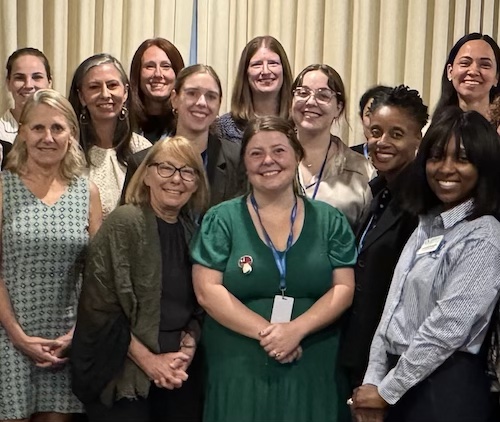
We were proud to partner with the Association of University Centers on Disabilities (AUCD) Special Interest Group on FASD for a Trainee Mini Conference during FASD Impact Week. This engaging mini conference was designed to uplift voices, foster connection, and inspire others. AUCD runs national LEND (Leadership Education in Neurodevelopmental and Related Disabilities) programs. Elizabeth Cleveland, chair of the LEND trainees program, led an impactful session, addressing ways that educators and systems of care can be more FASD-informed.
Our partners at the Center for Health Services Research (CHSR) at the Uniformed Services University of the Health Sciences (USUHS) joined us on Wednesday for a great workshop in which leading scientists shared their latest research and data on PAE and FASD in the military health system. This exciting project is developing a pilot telehealth FASD clinical management model for primary care providers to be broadly deployed using a hub and spoke model reaching military beneficiaries nationally, ahead of expansion to civilian clinical settings.
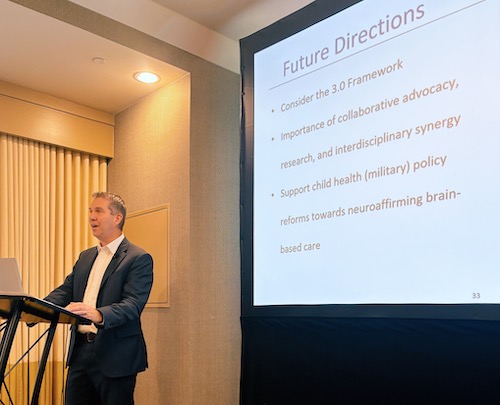
An emotional highlight of the USUHS workshop was a living experience family panel moderated by Jennifer Wisdahl, FASD United Chief Operating Officer. The panel featured self-advocates Barb Clark and Emily Hargrove sharing their personal stories of navigating health systems that are too often not trained on how to recognize or accommodate individuals with FASD.
Supporting the FASD community to “grow in all conditions”
Tuesday evening featured our annual Red Shoes Gala at The National Press Club, celebrating the FASD community and raising funds to support our mission. With so many supporters in attendance sporting their bright red shoes for FASD Awareness Month, the Gala was a beautiful and powerful reflection of the strength of the FASD community. Tall colorful flowers bloomed atop each of the tables, a striking centerpiece and reflection of how our community continues to grow in all conditions. Through the generosity of the community, FASD United raised much-needed funds to support programs that empower people with FASD and raise awareness.
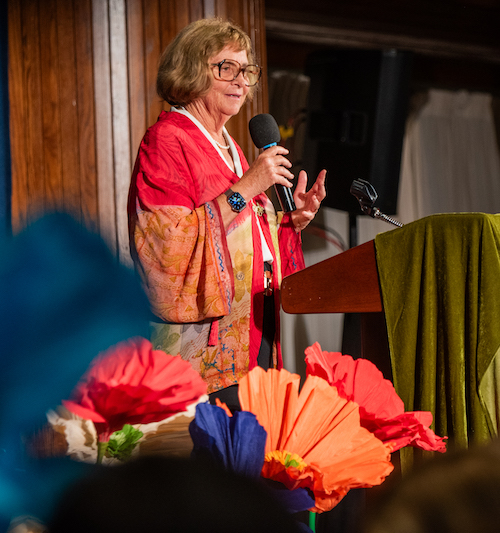
Pioneering FASD researcher Dr. Heather Carmichael Olson, author of the Call to Action, spoke about the early challenges and milestones in FASD research. Susan Shepard Carlson, previous FASD United board chair, spoke about the progress that has been made in the field and the need that still exists, particularly among the many people with FASD who are over-represented in the criminal justice system. Dr. Christie Petrenko delivered impassioned remarks on the importance of merging a love of research with a calling to advocate for policy solutions to address the challenges that are present in this research.
Barb Clark spoke movingly about her personal journey, from a mother to a professional trainer to a newly diagnosed FASD self-advocate. Jennifer Wisdahl, FASD United Chief Operating Officer (COO) spoke about the growth of FASD United and the impact we are making on families and the community. Mike Anderson, FASD United Board Chair, energized the crowd into spirited bidding on several incredible auction items generously donated by our amazing donors. Emma Baldwin of FASD United closed out the Gala on a note of deep gratitude and appreciation to all the supports and donors in attendance.
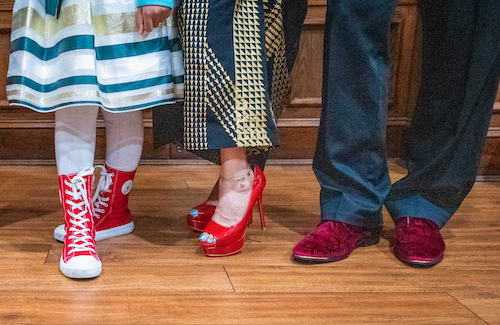
All of us at FASD United would like to give a special Thank You to all of our generous Gala sponsors and all our board members, and in particular, we would like to thank Constance and Jay Mazelsky, Kathleen Blatz and Gregg Page, and Kate Boyce and Joe Reeder, who really made the evening possible.
The power of impact as attendees return home
This year’s Impact Week has been truly historic, capping off with passage of the FASD Respect Act in the U.S. Senate which awaits the President’s signature. Our collaborators and partners, from within the CDC and DOD to national organizations and grassroots community partners, are all feeling more empowered by Impact Week and ready to advance the FASD field. Advocates from across the country, inspired by the success of the Respect Act, are more committed than ever to lifting up the FASD community through policy change. Families living with FASD, feeling seen and valued for who they are, are moving forward with a renewed sense of purpose.
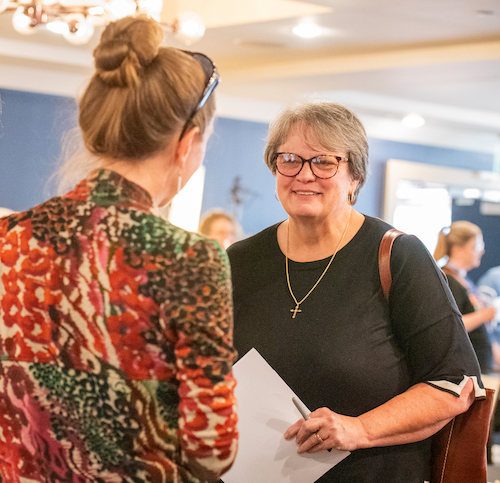
From the immediate impact of a community feeling its true power and strength, to the lasting impact of policy change, to the personal impact of families with FASD being celebrated and valued, this week has taken the FASD community to the next level.
It was incredible and serendipitous for us all to get the news of the Respect Act passing the Senate right after the conclusion of impact week. If you were looking for a sign that we as a community are powerful beyond measure, this was surely it. FASD United is so proud to celebrate with the community and to bring advocates and families and professionals together to move us all closer to our shared vision of an FASD-informed world.
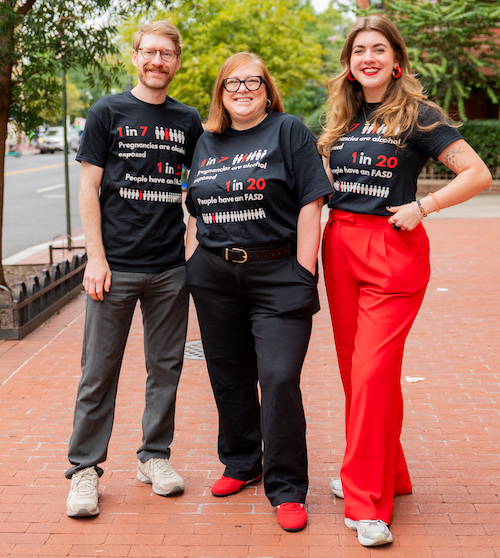
(from left to right) Chris Melfi (Policy Coordinator), Jennifer Wisdahl (Chief Operating Officer), Sophie Sissi (Media Director)
More Impact Week materials are coming soon
Materials from Impact Week will be available soon, including slide presentations, photos, and documents.
Please be on the lookout for more content from Impact Week, including photos and video clips, which we will be sharing in the coming days. Please check our website and follow our social media to get all the latest news.