“There is so much we can do to make people’s lives better,” Alexandra Edwards emphasized during our recent conversation. “If we support individuals and just ask people about their alcohol use, we can make such an impact.” Her passion grew as she described the “long-term upstream impacts of prevention and support.” Working in partnership with Alexandra, Kassandra S. Greci and Beth Kelsey, alongside their team, are leading the charge to address FASD among nurse practitioners. “We need to help healthcare providers to integrate screening into their work in a way that is not burdensome,” Alexandra points out. By working to address FASD in this crucial area, the team is also addressing addiction, prenatal healthcare, and so many other important health conditions.
FASD United is proud to spotlight each of the organizations that are part of the CDC’s National Partner Network (NPN) and in our latest piece, we are delighted to feature the nurse practitioner partnership of the University of Alaska Anchorage, Association of Women’s Health, Obstetric & Neonatal Nurses (AWHONN), and National Association of Nurse Practitioners in Women’s Health (NPWH), key members of the NPN that are advancing the FASD field by partnering with nurse practitioners, midwives, and nurses to address FASDs. The team is ensuring that nurses and midwives are FASD-informed and empowered to work effectively with clients impacted by FASD and prenatal alcohol exposure (PAE).
The NPN is a collaborative coalition of organizations dedicated to advancing key goals, including reducing PAE and substance use, enhancing support services and access to care, and improving the identification and health of children and families affected by FASDs. As a proud participant in this collaborative effort from 2022 to 2026, FASD United is excited to contribute to public education on FASD and prenatal substance exposure alongside these exceptional partners.
As FASD United’s Communications Director, I had the pleasure of speaking recently with three incredible members of the NPN nurse practitioner team: Alexandra Edwards at the University of Alaska Anchorage’s (UAA) Center for Behavioral Health Research & Services (CBHRS), Kassandra S. Greci at the Association of Women’s Health, Obstetric & Neonatal Nurses (AWHONN), and Beth Kelsey at the National Association of Nurse Practitioners in Women’s Health (NPWH).
The nurse practitioner, midwives, and nurses partnership works to increase knowledge and skills among advanced practice nurses and midwives, as well as students and the public, about FASDs and the health impact of alcohol use during pregnancy, with the ultimate goals of reducing alcohol-exposed pregnancies and improving population health.
A devoted team full of passion
Alexandra Edwards has been working in FASD since 2008, admitting that when she started, she wasn’t terribly informed about FASD, though she was quite familiar with developmental disabilities through her relationship with her brother with Down syndrome. “I was familiar with that world of disabilities, and I’ve stayed involved in the FASD area because I find the work so valuable,” Alexandra says, characterizing FASD as “a huge public health issue.”
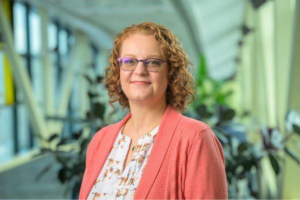
Delving a bit into her background, Alexandra talked about joining UAA as a project coordinator on the CDC’s previously funded Arctic Regional Training Center project, which has worked to educate health providers in Alaska on FASD. “We took the FASD curriculum that had been developed by previous grantees and adapted it for Alaska,” Alexandra says. “We merged it with our state’s existing FASD curriculum and did training around the state for several grant cycles.”
For many years, Beth Kelsey has been a women’s health practitioner, assuming a variety of different roles. Beth currently represents NPWH in the nurse practitioner project. “Our work really got started when we held our national conference and heard a presentation on FASD. That resonated with so many attendees and sparked a conversation among us about addressing FASD, and potentially working with the CDC and the folks in Alaska,” Beth says. Knowing that as a team, they would be well positioned to reach nurse practitioners who provide care for women, they were excited to get the word out about FASD. “It seemed like a perfect fit,” Beth says.
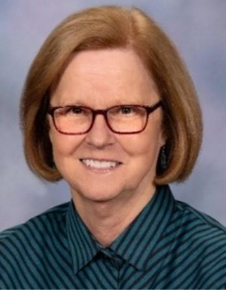
Beth explained to me that, “I stay engaged because I have the privilege of meeting so many passionate, dedicated professionals with so much knowledge in this area,” adding, “I deeply appreciate being afforded the opportunity to work with this team.” Much of Beth’s clinical work is in the area of family planning. Addressing FASD feeds right into her passion of supporting women before they get pregnant to think about what is important for them and make healthy choices, including the choice to avoid alcohol and to consider using contraception.
A particularly meaningful piece of Beth’s practice is working with individuals with FASD, adults and adolescents, and supporting them on their own pregnancy journey, as they consider their own health and lifestyle decisions. Over time, Beth has gotten a better sense of the nuances of how she can best empower these individuals to have healthy pregnancies, an outcome which Beth is particularly proud of.
Delivering powerful resources to nurse practitioners
Kassandra Greci, an experienced women’s health nurse practitioner, was introduced to the FASD project through her role as the senior health manager of women’s programs at AWHONN. “I am so thankful for my V.P. Karen Crowley, who introduced me to this work,” Kassandra made sure to start out by saying. Kassandra works extensively with advance practice nurses and focuses on how they can incorporate resources into their practice to support patients during pregnancy and prior to substance use.
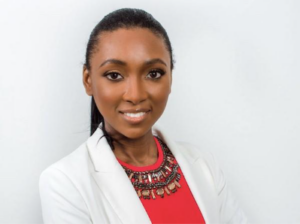
For Kassandra, her passion is driven by the opportunity to create powerful resources for nurses. “When we hear from our nurses about how they actually put these resources into practice, when we hear from patients how they had such an impact on their life and health during that precious time of pregnancy, I feel pushed to accomplish even more,” Kassandra says. “What we are doing together is truly impactful.”
As the journal editor for NPWH, Beth has put out numerous great articles in the last few years. “Our members are getting the articles and reading them in depth,” Beth says. “Educators have these articles as a resource as they are teaching, and they are pulling out these articles to point to and to use as tools. They are clinically relevant, evidence-based, scholarly, everything that we would want.”
When asked to name a particularly popular resource, Alexandra had an answer ready without skipping a beat: “Every time we go to an event, our fetal development chart disappears so quickly, we often have to print more.” Alexandra describes the chart as the resource her team gets the most questions about it. “We know from focus group feedback just how popular of a resource this is,” Alexandra says, adding, “We continue to make recommendations on how the chart can be used.” Originally adapted from FASD United, the fetal development chart remains a very popular resource for patients as well as an educational tool for students and early-career nurses and midwives. “It is probably our most downloaded resource on our website,” Alexandra says.
A great aspect of the team’s resources is how they are interlinked. “Each of our resources can be viewed separately, but they also operate as one cohesive set of materials,” Alexandra says. “My hope is that these tools will continue to drive the field forward for nurses and midwives. We have screening tools, guides on how to work with people that are neurodivergent, how to choose a screening tool that is appropriate for the type of population you are working with. All of these tools grouped together really provide nurses with what they need to address FASD.”
A website filled with a wealth of practical tools
The project’s website (available here) is a sight to behold. Filled with an abundance of practical tools, information, and resources, the website is a model in the FASD field for effective resource sharing. Beth told me how proud she is of all the hard work the team has put in to launch and maintain the site. “Our website has come such a long way and is so well organized and is just chock full of great information. I think it is one of the best websites I have seen on a topic like FASD.”
New tools are available through a Conference Toolkit. You can connect with experts, get information, and join the community discussion. Learn how to get involved and even become a champion, as well as meet the champions. A wealth of professional resources are available, including easy to use handouts and training on alcohol Screening, Brief Intervention, and Referral to Treatment (SBIRT).
Continuing education opportunities and education webinars are available on the website as well. Beth told me that she is proud of how the team has taken the time, when crafting webinars, to make sure they are interactive and dynamic. “An interactive session has so much more impact than someone standing up there talking about statistics,” Beth says. “Giving people the opportunity to talk and interact makes so much difference, especially because FASD is still such a hard topic to talk about. It can be quite difficult to talk about substance use around a pregnancy.”
Indeed, these are not easy topics. Yet, nurses as a profession are often impassioned about having the hard conversations with their patients. Beth described how eye-opening it was to listen to students and experienced nurses discuss FASD and alcohol screening. In smaller groups during a past national conference, students and nurses went over different clinical scenarios and what they would do and how they might feel about it. “That was so impactful, and I am proud to have been part of it,” Beth says.
Resources to meet any learning style
As Beth points out, the team has taken the concerted effort to ensure that their resources accommodate a range of different learning styles and the different ways that people like to receive information. “Some of our resources take the form of fact sheets, others are micro-learnings. We offer webinars, a conference toolkit, and screening tools,” Beth says, emphasizing the importance of utilizing different approaches to some of the same messages. “For example, younger professionals often respond positively to short videos, while others may prefer a document they can sit and read,” Beth points out. “It’s quite difficult for me to try and pick out one resource of ours in particular. I am proud of how we present information in different ways, for example with SBIRT, because that’s how you best get the word out there.”
Kassandra highlighted some of the publications that the team has produced, which are so valuable when viewed from an educator point of view. “Students currently in nursing school are able to pull these peer-reviewed academic articles related to FASD and it feels good for us to be part of that,” Kassandra says, noting that, “There weren’t a lot of articles on this topic at first, so for us to work together and develop these articles has been amazing.”
It has been such a great value to the field to give nursing students access to this information. There is an aspect of which this functions to build “champions in training” as students feel an enlightened passion within them to say, “Wow, I really want to learn more about FASD” as they push forward and talk with their teachers about the topic and then push forward in their career to address FASD.
Kassandra characterized the feedback the team gets from nurses as “amazing.” At conferences, when groups break into discussion or meet within a special interest group or participate in a podcast, the feedback is filled with such an upbeat spirit. “I’m so proud of what we do as a group,” Kassandra says, adding, “Everybody is sharing their different experiences with each other, building off presentations and webinars. With our interactive sessions, you can feel it right in the moment, the impact our work is having. Honestly, I feel blessed to be part of this group. I learn from every single one of our partners.”
Alexandra talked about the ways in which nurses work in such different places and with different populations. As she says, “There’s not going to be that ‘one thing’ that drives the FASD field forward for nurses. It’s going to look different depending on where they are working and who they’re working with.” The team is continually adjusting and updating different resources for different learning modalities.
A model for collaboration and teamwork
Alexandra remarked to me with delight that this has been the most collaborative group of grantees she has ever experienced. “This group is always saying to each other, ‘How can we do this together, how can we spread our resources across all of the grantees.’ I am loving that, it’s fantastic, I can’t get enough of that.”
According to Alexandra, working with AWHONN and NPWH has been nothing short of fantastic. “It’s great to look at the different resources that we are each contributing and see how we can use those to launch new products for us and how we can adapt products for our nurses and midwives, in the ways that I know others have done with adapting some of our resources.” For example, the nursing team pooled its resources with the medical assistants group and worked together to address the fentanyl topic. “We are experiencing collaboration more than we had before. I can’t say enough about how much I am enjoying that.”
Kassandra adds, “This is a very collaborative group and we work so well together. This pushes me even more. It allows me to think outside the box, and I never feel hesitant in sharing my thoughts and ideas with everyone, because I know people will really listen.” The nursing group is keenly aware of how coming together from different walks of life and different specialties strengthens the team as a group.
Alexandra says, “The collaboration adds so much strength to the work that we do. It just bolsters everything.” Access to social media posts is one particular tool that has been huge for the nursing team. As a relatively small group, “When we can identify things where we don’t have to reinvent the wheel, I see that as a really prudent use of resources,” Alexandra says, adding, “If there are already CDC-reviewed social media posts that we can use that have consistent messaging across grantees, I’m all for that.” As a result, the nursing team takes care to ensure that messaging is consistent, with the same branding. “This takes some of the pressure off us to create things entirely on our own, freeing up our limited time and resources to be directed towards other important pieces of fulfilling our mission of supporting nurses.”
Learning from partners and colleagues in the NPN
Alexandra says that being part of the NPN allows her to feel connected to the other grantees. She now has a lot more frank and open discussions about common challenges, for example how to keep their champions engaged. “It turns out that everyone struggles with some of these same issues, and I don’t think we were having those discussions before,” Alexandra says, adding, “The NPN group and the support we are getting from CDC has been phenomenal this round and I really want to give them a shout-out.”
Kassandra adds that she feels like everyone in the partnership is open to receiving different feedback and ideas. “That is what I love about our collaborative. We can brainstorm and think of new ways to tackle a certain situation.” A type of strategy that may not fit one particular group can lead to a resolution for another person’s group. Kassandra loves being able to meet at least once a year as a whole NPN group, in addition to the smaller groups that meet throughout the year. “I think the collaboration among us is excellent. That’s the reason why we are making such an impact, it is why we have the ability to create and enhance the resources that we have.”
Beth describes the meetings when CDC brings all the partners together as “really phenomenal,” adding, “To see what all of us are doing, to see that we have the same goal in mind, it’s great to see how we can be creative and how we can continue to work together.” The team appreciates the opportunity to write articles together, conduct professional training together, and the other exciting aspects of the partnership that pull everyone together.
Alexandra says, “One of the things I appreciate about working with CDC is the flexibility they have provided us to be responsive to feedback from NPWH and AWHONN’s members. One thing we’ve been able to do is go to major conferences and speak to members to see what they need. CDC gives us the flexibility adjust on the fly to those requests.” On this project, that feedback has led the nursing team to develop resources on fentanyl (and opioids generally) and cannabis, as well as alcohol. “We have educated people on how using these substances together can lead to increased risk of harm to the pregnancy, the infant and the pregnant woman as well. I’m proud of how we’ve been able to adjust our plans and provide those resources.” Alexandra made sure to give a special shout out to the team at Oak Ridge Associated Universities (ORAU) for their support in getting the team’s materials together.
In closing, Alexandra made a point to acknowledge the contributions of team members who were nor part of our conversation and express appreciation for their hard work, remarking, “Lily Bastian, our expert consultant, is a huge driver of our success, along with our evaluator Corrie Whitmore. Katie Davis, our project coordinator, is really amazing, and we deeply appreciate Faith Ozer Green, a research professional who has been working with Lily on a lot of our workshops and materials this year. Thank you to our graduate research assistant Lauren Kiker. And of course, thank you so much to Diane King, our Director. We would not be here without Diane!”
*This project is supported by the Centers for Disease Control and Prevention of the U.S. Department of Health and Human Services (HHS) as part of a financial assistance award funded by CDC/HHS. The contents are those of the author(s) and do not necessarily represent the official views of, nor an endorsement, by CDC/HHS, or the U.S. Government.