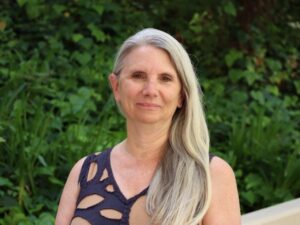
Dr. Sarah Mattson is a researcher and key member of the Collaborative Initiative on FASD (CIFASD). Please watch the short video below, in which Dr. Mattson summarizes her research in plain language.
Dr. Mattson works on FASD diagnosis, including BRAIN-online, a quick and accessible screening tool for FASD, which can be completed in about 30-60 minutes. This screening tool improves diagnosis and accurately distinguished people with histories of prenatal alcohol exposure from those without this exposure. The tool has been found to identify about 80% of people affected by prenatal alcohol exposure.
Having an ADHD diagnosis does not affect this accuracy. However, Dr. Mattson and her team are very interested in whether BRAIN-online is specific to the cognitive and behavioral challenges seen in FASD or whether it would more generally identify these challenges. The preliminary analyses suggest that researchers can accurately distinguish people with FASD and ADHD from those with ADHD alone and the team is hoping to follow up on these preliminary findings.
With the help of FASD United, the research team has also recruited people into their BRAIN-online study from around the US and in other countries. “We plan to look at the results from those people to see if we see the same results as in our “laboratory” studies.” Dr. Mattson explains. “But what we have learned is that people of all ages have been able to sign on to BRAIN-online and take the test. This is important because it means that our system works and BRAIN-online may be useful in screening large numbers of people using their home computers.”
FASD United featured Dr. Mattson last year for in an in-depth profile. We welcome the community to revisit this piece for more information on Dr. Mattson’s background, her key role in the beginnings of CIFASD, and her research on Brain-online and an earlier screening tool, the FASD-Tree.
Sarah Mattson worked on the very first brain imaging studies done in FASD as a graduate student. Later on, she worked to get CIFASD off the ground in direct collaboration with Dr. Edward Riley and other researchers to create an international FASD collaboration that became CIFASD. Sarah reflects that, “CIFASD has been such an integral part of my professional development. I can’t imagine where I would be if we didn’t have CIFASD.”
Sarah was inspired to develop new FASD screening tools as she became more and more aware of just how prevalent FASD is and how “just a small fraction of these people are ever identified.” Sarah set out to create screening tools that can be used by families and professionals who may not necessarily be highly trained in FASD diagnosis and developed BRAIN-online, an accessible tool for FASD screening that works.
The research on BRAIN-online continues to be encouraging. “Our latest study shows that with BRAIN-online, we can identify 80% of people who have been affected by PAE,” Sarah says. “80% is a kind of magic number for me because previous studies have shown that 80% of people with FASD are never properly identified. It’s really an amazing finding to turn that same number upside down.”
Sarah knows the value that come from getting an FASD diagnosis, pointing out that, “Having a proper diagnosis provides an understanding into what’s going on and a diagnosis helps clinicians to identify targets for intervention.”
Dr. Mattson feels deeply grateful for all her colleagues and told me that, “It has been an amazing experience being able to be part of CIFASD from the beginning. I will say this: We have a lot more work to do.”