Rebecca Tillou, an adult with FASD and powerful self-advocate says, “I came across this quote last year and wrote it down to use sometime. I think now is perfect:
“Shame thrives in darkness but withers in light. Let’s be the light.”
Neurodiversity is about empowerment and respect.
At its core, the term neurodiversity refers to “a world where neurological differences are recognized and respected as all other human variations.” Neurodiversity frames the variations in how our brains work as “neurodivergence” in place of viewing them through the lens of illness and disease. Rather than pushing for a cure or a “fix” for impacted individuals, the neurodiversity movement advocates for acceptance and accommodation.
Neurodiversity Celebration Week, recognized March 16-20, is a time to honor our differences and empower each and every individual.
FASD Is Neurodiversity.
Now is the time to amplify the voices of the FASD community in the neurodiversity conversation. Fetal alcohol spectrum disorders (FASD) can be many things: a disability, a diagnosis, an identity, and a type of brain difference that sits under a larger umbrella of differences, alongside autism and ADHD, for example. We know that FASD is often non-apparent and stigmatized, and that individuals with FASD typically get less support than individuals with other types of brain differences.
The neurodiversity movement is about amplifying the voices of people with differences that have been left out of the conversation. Unfortunately, FASD is often left out of this conversation altogether. Together, let’s reframe neurodiversity in a way that is truly inclusive of the FASD community.
The FASD and neurodiversity movements are stronger when we work together. When we build on each other’s experience, we inspire each other’s passion. Our movements are united in our call for respect and access to support where it is needed. Embracing neurodiversity allows us to support all differences and ways of being, including those of individuals with FASD.
Together, we can work to remove unfair barriers to care for neurodivergent individuals. These barriers include being misunderstood and not properly supported in school, a lack of recognition in the legal system, and often being excluded from support services, like Medicaid Waiver programs, for example.
Neurodiversity informs how we think about FASD.
We can apply the core principles of the neurodiversity movement to FASD. Let’s see people with FASD as unique individuals, with brains that are uniquely different from others. We know that functional impairments exist alongside unique strengths and positive traits. We can reframe FASD through the model of neurodiversity, as we shift away from a focus on negative behaviors and focus instead on how we can support and accommodate the brain-based differences that are associated with FASD.
The organization FASCETS Center for Neurodiversity says, “The field of neurodiversity affirms that brain-based differences are pervasive across societies and lead to unique strengths for individuals. It shifts the focus from “deficits” to recognizing that barriers arise from a poor fit between how a person’s brain works and their environments, including expectations.”
FASCETS adds that, “We know this to be true for individuals with FASD who themselves are a neurodiverse group, each affected differently. Unfortunately, FASD is most often left out of the neurodiversity conversation despite it being one of the leading causes of neurodevelopmental differences. Research shows that FASD touches most of our lives in one way or another, more so than any other form of neurodiversity. Highlighting its place under the umbrella of neurodiversity helps address stigma, underrepresentation, and misunderstanding, leading to more equal access to support and services for those with FASD and their families.”
It’s time to listen to the voices of self-advocates and those with living experience.
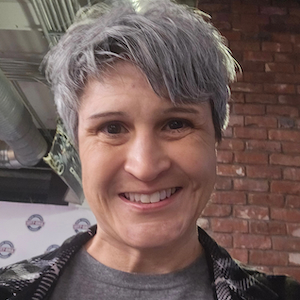
Rebecca Tillou is a shining example of what is possible when FASD advocacy meets neurodiversity. A longtime advocate, Rebecca has championed awareness campaigns across the country. Rebecca is passionate in her belief that, “Neurodiversity is what makes the world a colorful, fun place. So many different traits, so many people learning from one another. Yes, I am living with an FASD. Yes, I am neurodiverse, and neurodiversity is what brings everyone together, into one big community.”

Carl Young, a self-advocate and the executive Director of FASD North Dakota, an affiliate of FASD United, reflects, “I have spent the past 10 years ensuring that people with FASD are recognized as part of the neurodiversity movement. After receiving my own FASD diagnosis at age 52, I have seen firsthand how powerful recognition can be.”
Getting an FASD-related diagnosis is often the first step on a journey towards self-understanding and empowerment. Carl points out that, “The ideals of neurodiversity — dignity, acceptance, and belonging — resonate deeply within the FASD community. Yet many individuals with FASD continue to experience misunderstanding and stigma, even within broader neurodiversity spaces. When we fully embrace the truth that neurodiversity includes FASD, we move closer to a future where every brain is understood, supported, and valued.”
As FASD United works to fulfill our mission to empower the FASD community, we are embracing neurodiversity through our recently published Self-advocate Guide, designed by and for individuals with FASD. We are showcasing a diverse range of living experiences in our “Glimpses of FASD” video series, where people from a range of background and perspectives share their own stories of living with FASD in their own words.
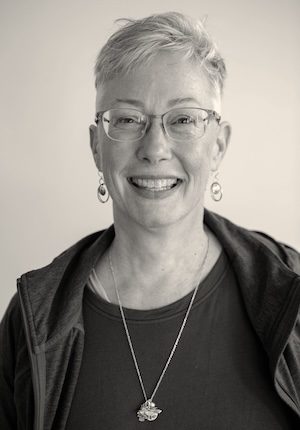
Tandi Rogers is a self-advocate living with FASD and says, “My neurodivergent perspective often helps me listen more deeply, notice patterns, and accompany people with compassion. One way FASD shapes my life is that I tend to trust people easily, and I don’t move quickly into defensiveness. Some people might see that as naïve, but in my experience it’s actually a lovely place to live. It allows me to meet people with openness and curiosity. As a spiritual leader, that posture of trust creates space for people to be honest about their lives. Neurodiversity reminds us that there are many ways of knowing, learning, and encountering the sacred.”
Emma Baldwin, FASD United’s Director of Partnerships, says, “I work in the FASD field, so I often share that I have a sibling with FASD and that I am autistic myself. While the autistic ‘voice’ often goes unheard in the general population (ironic language choice, since many of us are nonverbal), autistic people take up loads of space in the disability and neurodiversity communities.”
Emma adds, “The concept of neurodiversity allows us to look deeper into the community of brain-differences. The concept of neurodiversity allows us to advocate as a whole while examining deeper relationships among the groups that make up that whole.”
Person-centered care is neurodiversity in action.
As we often say, “If you’ve met one person with FASD, you have met one person with FASD.” FASD encompasses a wide spectrum, and no two people are impacted in the same way. It is important to recognize that each person with FASD is a unique individual.
In practice, this means that it is crucial for systems to customize their services to each individual’s unique experiences and add more pages to their book of care, rather than taking a one-size-fits-all approach. These systems need to be FASD-informed in order to accomplish this, and that is where education and training comes in. Person-centered care benefits people with FASD, neurodivergence, and by extension the entire community.
Neurodiversity is about seeing the whole person: strengths as well as challenges.
People with FASD deserve to be viewed through a strengths-based lens. When we do, we see just how impressive and accomplished each person is, as they frequently adapt themselves to navigate a world that is not truly designed for them. This involves tremendous creativity, ingenuity, determination, and passion. These qualities deserve to be seen and celebrated, even as we acknowledge the difficult realities of dealing with the many challenges of FASD and the real pain and trauma that can result.
Looking at our language is an important piece of neurodiversity.
Though we know that FASD holds a unique stigma due to its overlap with substance use and pregnancy, stigma is an issue for anyone who is neurodivergent. The language we use is important. We invite you to please refer to FASD United’s Language and Stigma Guide, which is now available in Spanish. The FASD and neurodiversity community are united in our vision of a world where each person is treated with respect and empowered to thrive as their authentic self.
Our partners in the neurodiversity movement include the Autism community.
Autism is often the most visible and prominent condition in neurodiversity discussions. There are many reasons for this, and the relationship between FASD and autism is complex. The Autism community is an important ally and partner of the FASD community when it comes to advancing neurodiversity. We are grateful for the passionate work of many Autism self-advocates who continue to grow the neurodiversity movement. Last year, we sent a clear message of support for the Autism community as we joined leading Autism organizations in calling for “respectful public dialogue” around the condition.
As we work to give FASD a seat at the neurodiversity table, we recognize that other neurodiversities are often overlooked as well. These include dyslexia, dyspraxia,, tourettes, OCD, epilepsy, and others.
Mental health and neurodiversity: a complex relationship
We know that individuals with FASD are significantly more likely to experience mental health challenges, including depression, anxiety, and other conditions that impact mood, thinking, and behavior. Common mental health conditions can impact people with FASD in unique ways. For example, depression in people with FASD may be related to struggling to read social cues and meet social expectations.
Within the neurodiversity movement, there is an ongoing discussion of the role of mental health and mental illness, and the sometimes unclear, blurry and shifting boundaries between what is considered a mental illness and what is considered part of neurodiversity. This is a complex and nuanced issue. As FASD touches on both mental health and neurodiversity, the FASD community should be invited to be active participants in this important ongoing discussion in our society.
A balanced approach to treatment
While celebrating diversity and accepting difference is important, medical interventions have an important role to play in treating the symptoms than can get in the way of the health and success of people with FASD. We know that early intervention leads to improved outcomes. These interventions should be evidence-based, FASD-informed, accessible, and empowering to those they serve.
As we look at ways to treat the symptoms associated with FASD, the Social Model of Disability shows us that disability can be “caused by the way society is organized, rather than by a person’s impairment or difference.”
Get Involved!
To learn more about Neurodiversity Celebration Week and how you can get involved, please visit neurodiversityweek.com.