The FASD community from all across the country came together for National FASD Impact Week in Washington, DC, proudly hosted by FASD United. Over the course of four full days last week (September 27-30), advocates, families, partners, and professionals closed out FASD Awareness Month with a symposium, an advocacy-filled “Hill Day,” a gala celebration, and meetings with national partners. The FASD community showed up with passion and resolve to amplify our collective voice and show that FASD is an “AND conversation.”
Record-breaking Hill Day demonstrates the power of the FASD movement
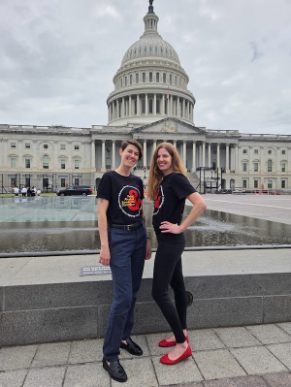
Advocates from across the country came together on Capitol Hill for our annual “Hill Day,” meeting directly with their legislators in their House and Senate offices. Following the passage of the Federal FASD Respect Act at the conclusion of 2025’s Impact Week, advocates are calling out the need to fully fund the Act’s authorized programs.
“This year’s Hill Day was the busiest ever,” says FASD United Policy Coordinator Chris Melfi. We had over 90 meetings scheduled for 110 advocates across 29 states. Many advocates scheduled and planned their own meetings this year, showcasing this community’s growth and ability to make an impact. With the Respect Act language now law, Hill Day attendees delivered a simple message: Fund FASD. The power of this message was strengthened by the voices of those who delivered it. Self-advocates, parents and caregivers, siblings, researchers, and medical professionals joined together to make sure FASD is recognized, prioritized, and destigmatized. Chris adds, “We hope everyone’s advocacy journey continues beyond Hill Day, because creating FASD-informed systems requires FASD-informed lawmakers.”
The FASD Symposium inspires a renewed Call to Action
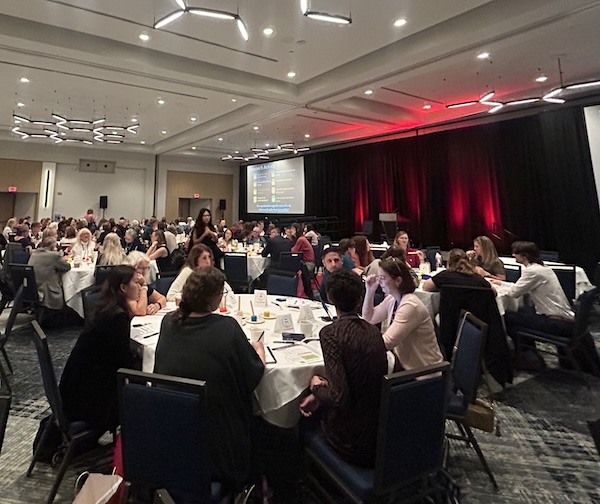
An engaging and productive symposium brought leaders across many disciplines in the FASD field together to discuss how FASD is an “AND conversation.” We know that FASD touches on so many areas and systems. Participants discussed ways to address FASD & education, FASD & mental health, FASD & justice, and much more. Researchers, families, and members of the FASD United Affiliate Network shared their experiences, perspectives, and lessons learned.
Key to organizing the symposium is Emma Baldwin, FASD United’s Director of Partnerships, who says, “I am still trying to grasp that the first cycle of the FASD Symposia is over; I now have all the data to summarize our recommendations, finishing our cohesive plan to make progress in the FASD field & community.”
The 2009 “A Call to Action” document created by a congressionally named task force on FASD served as the jumping off point for the group to reflect on where we are as a field. We are excited to say that we have now reviewed all the recommendations from the task force. The group discussions and reports generated by this symposium are forming the foundation for an upcoming white paper developed by FASD United, which will present a summary of the discussions. View the white paper from last year’s Impact Week to get a preview of the type of collective knowledge and experience that will guide this year’s conclusions.
A striking display of research and meaningful programs
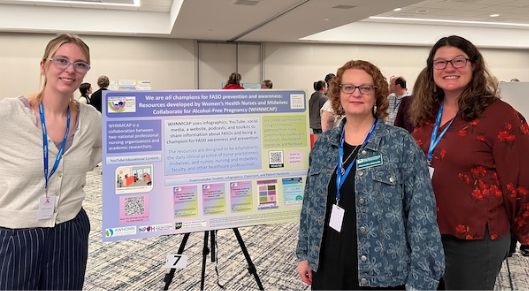
35 research and informational posters filled up the Poster Exhibition space, highlighting the work of many truly incredible organizations that are on the ground serving the FASD community. The exhibition provided a great opportunity for attendees to hear directly from researchers and leaders in the field, ask questions, and build connections.
Community organizations, including affiliates of FASD United, university researchers, and others shared research findings, opportunities for collaboration, and available programs and services for individuals and families.
The poster presenters did a great job translating dense research findings into plain language for a general non-scientific audience. The exhibition expanded our field’s collective knowledge base of the many facets of FASD and how to support those affected. The passion of the presenters, along with the quality of the materials, made everyone feel inspired and hopeful for the future of the FASD field.
Strengthening the bonds of collaboration between national partners
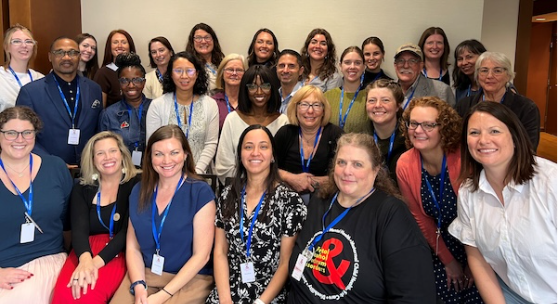
FASD United was honored to bring many of our national partners to Impact Week to strategize, coordinate, and share best practices. Tuesday featured a working meeting of the CDC National Partner Network (NPN), which is making great strides in reducing alcohol-exposed pregnancies, supporting families, and educating professionals in systems of care.
Presentations by CDC staff Elizabeth Dang and Dr. Nick Deputy showcased the latest data on FASD and prenatal alcohol exposure and showed how the NPN is improving outcomes, while a session on FASD across the lifespan by Dr. Claire Coles highlighted the range of challenges experienced by individuals with FASD.
Elizabeth Dang of the CDC says, “I think our NPN meeting on Tuesday went very well—thank you again to the Champions Consortium & Collaboration workgroup for serving as the planning committee for the NPN meeting. And to Katherine, Betsy, and Jennifer for facilitating multiple sessions and to Sam for once again leading the tangible resource activity, to Rosa for the bingo activity, and yay to Shelby for being the bingo winner!”
Sarah Brown, Director of Program Services for FASD United, remarks about the NPN meeting, “I loved participating in the many engaging and collaborative discussions we had about programming, evaluation, and next steps to continue this important work.”
Our partners at the Center for Health Services Research (CHSR) at the Uniformed Services University of the Health Sciences (USUHS) joined us on Wednesday for a great workshop on “Pathways to Impact: Advancing FASD Care & Support in the Military Health System.” USUHS staff discussed their work to develop a telehealth FASD clinical management model for primary care providers, which will be deployed using a hub and spoke model. Reaching military beneficiaries at first, the project is designed to expand to civilian clinical settings across the country. The team is actively looking for Tricare-eligible families for their research.
Dr. Nicholas Deputy, a Lieutenant Commander in the U.S. Public Health Service was the keynote speaker and presented on public health surveillance activities to inform prevention of alcohol use during pregnancy as well as identification and support of children with FASDs. Additional presentations shared information on FASD care pathways in the military health system, caregiver perspectives, maternal alcohol use data, and more.
The USUHS workshop capped off with an emotional living experience panel moderated by Jennifer Wisdahl, FASD United Chief Operating Officer. The panel featured self-advocates Laura Bousquet and Gina Schumaker and birth mother Angela Freeman, each sharing their personal stories of navigating health systems that are too often not trained on how to recognize or accommodate individuals with FASD.
The National Foster Parent Association (NFPA) hosted their 55th Annual Together for Impact Education Conference in collaboration with Impact Week, bringing parents and advocates together for informative workshops and a day of advocacy on Capitol Hill.
SAMHSA and their FASD State Virtual Learning Collaborative grantees held a grantee meeting to support state agencies on best practices to support the FASD community, while the Association of University Centers on Disabilities (AUCD) Special Interest Group on FASD held their Trainee Mini Conference during FASD Impact Week.
Impact Week proudly hosted many members of FASD United’s Affiliate Network. Emma Baldwin exclaimed that, “After a full year of supporting the FASD Affiliate Network, it was lovely to feel how much easier it is to connect around the hotel when you have a friend in every Affiliate in attendance.”
An evening benefitting our work to make FASD an AND conversation
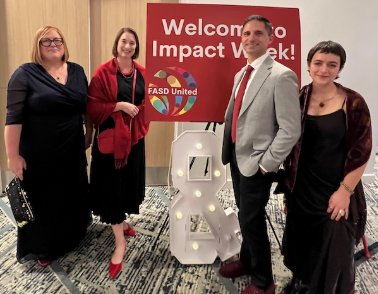
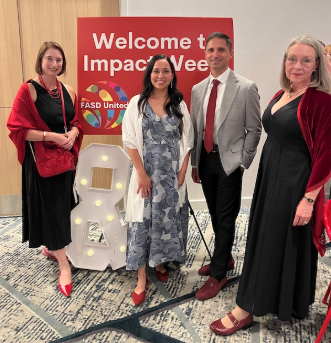
Monday evening featured our annual Red Shoes Gala, celebrating the FASD community and raising funds to support our mission. As attendees fed off each other’s energy while sporting bright red shoes for FASD Awareness Month, the Gala sent the unmistakable message that FASD is an “AND conversation.” Ampersand symbols (&) sitting atop each of the tables gave a striking display of the “AND conversations” happening throughout Impact Week. Through the generosity of the community, FASD United raised much-needed funds to support programs that empower people with FASD and raise awareness.
Jennifer Wisdahl, FASD United Chief Operating Officer (COO) and Susan Shepard Carlson, previous FASD United board chair, spoke to the progress FASD United is making in the lives of families and the need for sustained support.
Self-advocate and trainer Barb Clark shared her personal story of discovering later in life that she has FASD, along with her daughter. Dr. Elizabeth Barlet and Jaqueline Cortez-Wang, both FASD United board members as well as parents to children with FASD, spoke about their commitment to ensuring the best possible outcomes for their children in the face of significant challenges, as well as their passion for supporting others in the FASD community. Mike Anderson, FASD United Board Chair, energized the crowd into spirited bidding on some fantastic auction items. Emma Baldwin, FASD United Director of Partnerships, closed out the Gala on a note of sincere appreciation to all of our supporters in attendance.
Krystal Starwich, FASD United Special Projects Manager and Gala organizer reflects, “We are so grateful to our sponsors, donors, and attendees for their generous support of this year’s Red Shoes Gala. It was so wonderful to take a moment to gather, to honor our champions, and to celebrate the work of FASD United and the larger FASD community. The funds raised will allow the organization to continue to make FASD an “AND conversation.”
Honoring FASD Champions William J. Edwards and Rosa Arvizu
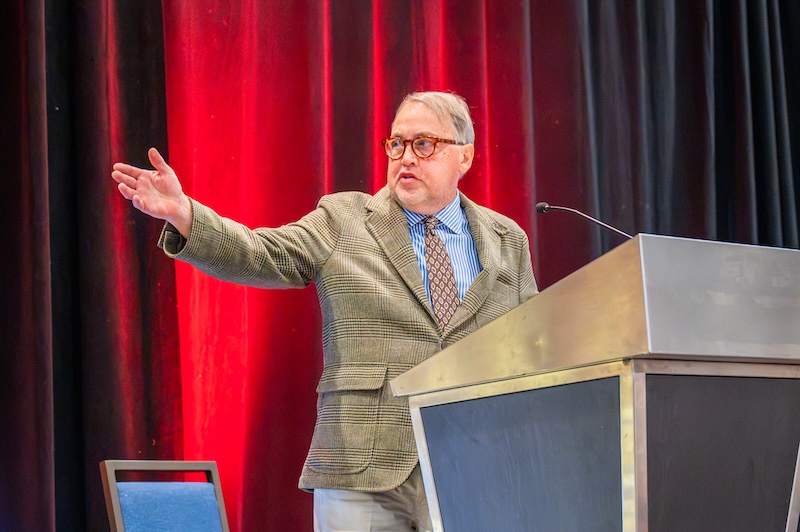
A highlight of the Red Shoes Gala was seeing William J. Edwards, longtime champion for supporting people with FASD in the legal system, presented with the Paul G. Hearne Award for Disability Rights by the American Bar Association (ABA). A group of leaders in the FASD field spoke to Mr. Edwards’ dedication to supporting individuals with FASD in the criminal justice system, including by hosting over 200 trainings for judges, attorneys, and other legal professionals in how to recognize and serve clients with FASD.
As a member of FASD United’s Board of Directors and co-chair of the FASD United Justice Advisory Council, Mr. Edwards has committed his career to pursuing justice for individuals with FASD as a public defender, advocate, and educator. As William J. Edwards says, “The Red Shoes Gala event was an evening to reflect on how far we have come in the FASD field in the last 29 years. The Paul G. Hearne Award was not about me but about the FASD community coming together to brighten the lives of those living with FASD. But while the evening was a time to remember, we cannot wait for the future to continue the advocacy we have been doing, and we must unlock the future of humanity by moving forward with funding for the FASD Respect Act and find funding so that FASD United can continue to improve the lives of those living with FASD.”
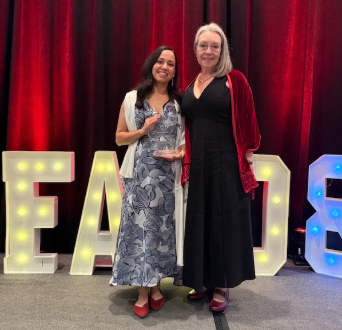
Rosa Arvizu, Program Manager of the FASD program at the American Academy of Pediatrics, was honored with the Partner of Excellence Award. Rosa leads AAP’s wealth of initiatives addressing FASD, supports pediatricians through education and training on FASD, and plays a key role in the continued success of CDC’s National Partner Network (NPN).
Rosa says, “At AAP, I am working to ensure that information on FASD gets out there to every single pediatrician. I take this responsibility very seriously. We need to continue to reach out to share the great information we have on FASD far & wide.”
Making a lasting impact
This year’s Impact Week brought the FASD community together as never before. We heard from so many participants throughout the week how empowered and energized they feel, as they get ready to take the next steps to advance the FASD field.
Advocates from across the country, building on the passage of the Respect Act, are more committed than ever to lifting up the FASD community through policy change. Self-advocates and families are moving forward with recognition of their own power and strength.
As Emma Baldwin puts it, “This year’s Impact Week was an exhibit of the growth and momentum of the FASD community that’s happening right now. It just keeps getting bigger, more thought-through, and more inclusive of new people and partners.”
The true impact of last week’s events will be felt far beyond the gathering space in Washington, DC as participants take what they experienced back to their communities and put their newfound knowledge into practice within their professional fields. We are excited to see the lasting impact ripple throughout the FASD community, from policy change to research breakthroughs to strengthened families and empowered self-advocates.
Thank you so much to everyone who took part in this year’s National FASD Impact Week. Let’s continue the work in our communities and keep coming together to move us all closer to our shared vision of an FASD-informed world. FASD is an “AND conversation.”
Materials from Impact Week will be available soon, including slide presentations, photos, and documents.
Please check our website and follow our social media to get all the latest news.